Category: Uncategorized

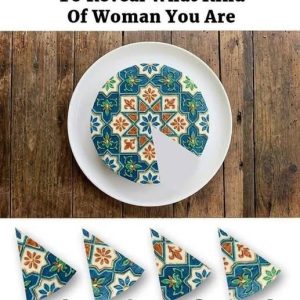
  • Which nail appeals to you most? It reveals what type of woman you are.

    Which nail appeals to you most? It reveals what type of woman you are.

    What if your personality could be reflected in a female archetype as unique as you? A kind of unexpected mirror that reveals your strengths, your dreams, your way of loving, thinking, and acting. I stumbled upon a fascinating list… and against all odds, I found myself on it! And you, which woman do you most resemble?
    The driven filmmaker: ambition ingrained in her very being

    You move through life like a train at full speed: nothing can stop you. Success is a non-negotiable goal for you. Whether in your career, personal projects, or entrepreneurial dreams, you have a clear vision and remarkable discipline.

    But behind this energy, there’s also a woman striving to balance ambition and personal equilibrium. You need a supportive network that never stifles your momentum. Your leadership is natural, and you inspire those around you like a locomotive guides its carriages.

    The Wild Explorer: The Bohemian Soul
    . You flee routine as one flees the grayness of everyday life. Your heart beats for the unknown, for uncharted paths, for sunsets over landscapes yet to be explored. You are an artist of the moment, an adventurer of the everyday.

    Your loved ones may find you unpredictable, but those who truly know you see an authentic soul. You value memories over objects, emotions over possessions. With you, life is like an art film, always surprising and passionate.

    The sincere caregiver: love on her sleeve

    The moment someone walks through your door, they radiate warmth. You are a confidante, a mother figure, someone who puts others before herself. Your ability to comfort, reassure, and love is a strength, often invisible… but undeniable.

    Sometimes you find it hard to say no, to think of yourself. But remember: you can’t pour love from an empty vessel. Your mission on this Earth? To spread kindness—and you deserve to receive it too.

    Deep thinking: the quest for meaning
    . You dislike superficiality. What stimulates you are debates, existential reflections, and challenging books. You possess genuine depth, and your perspective on the world is often more insightful than it appears.

    You may be more reserved than average, but when you speak, you listen. Your words hit home, your thoughts nourish those around you. You are a beacon in the fog, discreet but essential.

    The magnetic socialite: the queen of the party.
    You stand out from miles away. Your laughter, your energy, your ease in connecting with people make you someone unforgettable. Every encounter is an opportunity for you to share and spread good cheer.

    But behind that light, there’s sometimes a longing for deeper connections. Rest assured, your true friends see beyond the surface. Your optimism is contagious: you’re a real ray of sunshine

    You move forward alone, but never lost. You have charted your own course without asking permission or waiting for approval. Your values ​​are your foundation. What matters is being true to yourself.

    Some may find you distant, but in reality, you are whole. By fully embracing who you are, you pave the way for others. You remind the world that freedom is first and foremost an inner choice.

    So, which of these women do you resemble the most?
    Or perhaps you are a clever mix of several of them… Whatever the case, remember: you are a force, unique and precious.

    The Fierce Individualist: The Free Spirit

  • My Sister Wouldn’t Let Me Hold Her Newborn for Three Weeks Because of ‘Germs’ – When I Learned the Real Reason, I Broke Down

    My Sister Wouldn’t Let Me Hold Her Newborn for Three Weeks Because of ‘Germs’ – When I Learned the Real Reason, I Broke Down

    I used to think the hardest part of being an aunt to newborn twins would be the exhaustion by association — the late-night calls, the emergency diaper runs, the constant background crying that followed my sister everywhere.

    I was wrong.

    The real shock came the night I opened the nanny cam app and saw something that made my blood run cold.

    I can’t have children. Not “maybe someday.” Not “keep trying.” Just… can’t.

    After years of failed treatments and quiet grief, I stopped imagining nurseries. I stopped lingering in baby aisles. I stopped saying “when.” So when my little sister got pregnant, I poured everything I had into her instead. I threw the gender reveal. Bought the crib, the stroller, the tiny duck pajamas that made me cry in the middle of Target.

    “You’re going to be the best aunt ever,” she told me once, hugging me tight.

    I believed her.

    Our relationship had always been complicated. She had a way of bending reality until it suited her — small lies as a kid, bigger ones as an adult. But I thought motherhood might steady her.

    Then Mason was born.

    And for three weeks, I wasn’t allowed to hold him.

    At the hospital, I stood beside her bed with flowers and home-cooked food.

    “Can I hold him?” I asked, smiling.

    Her grip tightened. “Not yet. It’s RSV season.”

    I sanitized. I wore a mask. I waited.

    Next visit? “He’s sleeping.”

    Next? “He just ate.”

    Three weeks passed.

    Meanwhile, I saw photos online. Cousins cradling him. My mom rocking him. Even the neighbor posted about “baby cuddles.”

    Just not me.

    When I confronted her, she brushed me off. “I’m protecting him,” she texted.

    “From me?” I wrote back.

    No answer.

    The following Thursday, I drove over without announcing myself. Her car was in the driveway. I knocked. No response. The door was unlocked.

    Inside, the house smelled like baby lotion and damp laundry. I heard the shower upstairs.

    Then I heard Mason.

    That kind of cry that isn’t irritation — it’s need.

    I found him alone in his bassinet, face red, fists clenched, screaming. My body moved before my mind did. I scooped him up, and the second he hit my chest, he calmed, tiny fingers gripping my shirt.

    And that’s when I saw it.

    A small Band-Aid on his thigh.

    Not fresh-from-a-shot. Not hospital tape. Just… placed there.

    The corner was peeling.

    I don’t know what made me lift it. Instinct, maybe. Or the accumulation of weeks of being treated like a threat.

    I peeled it back.

    And my stomach dropped.

    It wasn’t an injury.

    It wasn’t medical.

    It was a birthmark.

    Distinct. Dark. Familiar.

    My brain refused to say the name at first. But my heart already had.

    Footsteps thundered down the stairs. My sister appeared, dripping from the shower, eyes wild. She saw Mason in my arms. She saw the lifted Band-Aid.

    Her face drained of color.

    “You weren’t supposed to see it,” she whispered.

    “What is this?” I asked.

    “Put him down,” she pleaded.

    Her voice wasn’t defensive. It was terrified.

    I placed Mason gently back in the bassinet, my hands shaking.

    “Why did you keep me away?” I demanded. “Why am I the only one?”

    She didn’t answer directly. She just stared at the mark like it might vanish if she willed it.

    I left without crying. Without screaming. Just cold.

    When I got home, my husband was in the kitchen, humming.

    “How’s the baby?” he asked casually.

    The way he said it made something inside me shift.

    That night, I watched.

    I watched him keep his phone face-down. I watched him jump when it buzzed. I watched him wash his hands longer than usual.

    Two days later, while he showered, I did something I never imagined I would.

    I pulled hair from his brush and ordered a DNA test.

    I told myself I was being dramatic.

    But I couldn’t live inside that question.

    The results came in on a Tuesday.

    I opened them in a parking lot, because I didn’t want my house to witness that moment.

    The percentage blurred on the screen.

    There it was.

    Confirmation.

    The birthmark under Mason’s Band-Aid had a reason.

    The same distinctive mark my husband had carried on his thigh since I’d known him.

    That night, I walked into the house and held up my phone.

    His smile collapsed before I even spoke.

    “I know why she wouldn’t let me hold him,” I said quietly. “Because I saw it.”

    He went pale.

    The truth spilled out in pieces — years of betrayal. An affair with my sister that predated her pregnancy. A baby they never planned but didn’t stop.

    “I swear, it wasn’t supposed to go this way,” he said.

    But it already had.

    The Band-Aid wasn’t to hide a wound.

    It was to hide resemblance.

    My sister hadn’t been afraid of germs.

    She’d been afraid of recognition.

    I filed for divorce. Cut contact. Packed up the life I thought I had.

    I miss Mason sometimes. That’s the part no one talks about. Loving a child who is proof of your own undoing.

    But I refuse to live inside someone else’s lies.

    What I saw under that Band-Aid wasn’t just a birthmark.

    It was the truth.

  • Joe Rogan Responds After His Name Appears in Newly Released Epstein Documents

    Joe Rogan Responds After His Name Appears in Newly Released Epstein Documents

    Recently released documents from the United States Department of Justice connected to Jeffrey Epstein have drawn renewed public attention. Among many names appearing in the records is Joe Rogan, who has since addressed the mention publicly.

    The material, released over 2025 and 2026 under a federal transparency law, contains millions of pages from past investigations. They outline how Epstein abused underage girls while also noting that investigators did not find enough evidence to establish a coordinated trafficking network involving other powerful individuals.

    The scale of the release has naturally stirred public scrutiny — not only of Epstein’s crimes, which are firmly established, but of anyone whose name appeared in communications around him, even when no wrongdoing was alleged.

    A brief email, a clear refusal
    Rogan’s name appears in a 2017 email exchange between Epstein and physicist Lawrence Krauss.

    In the message, Epstein wrote that he had seen Krauss on Rogan’s podcast and asked if an introduction could be made. Krauss replied that he would reach out. In a later follow-up, he informed Epstein that Rogan did not seem interested in meeting.

    Years later, Rogan addressed the exchange directly on The Joe Rogan Experience.

    “I’m in the files for not going,” Rogan said plainly.
    “It was never even a possibility.”

    He described being surprised that anyone thought he would want such a meeting, adding that he shut the idea down immediately.

    There was no attempt to dramatize it — only to clarify it.

    What investigators concluded
    During the same episode, Rogan reacted to coverage summarizing findings from the Federal Bureau of Investigation.

    The FBI concluded that while there was strong evidence of Epstein’s abuse of young women and girls, there was not sufficient proof of a broader criminal conspiracy involving other public figures.

    Prosecutors later noted that photographs and financial records recovered from Epstein’s properties did not directly implicate additional individuals in criminal activity.

    These findings do not soften Epstein’s crimes.
    They simply distinguish proven wrongdoing from association, rumor, and proximity.

    Oversight continues
    Members of Congress have since reviewed unredacted versions of the documents to ensure transparency and confirm that no material evidence was withheld from public release.

    Discover more
    Cryptocurrency
    Buy vitamins and supplements
    Cameras
    As more people named in indirect contexts speak publicly, a pattern is emerging — not of hidden networks being revealed, but of how easily association alone can ignite suspicion in the absence of wrongdoing.

    The quieter lesson
    There is wisdom in clarity.

    Epstein’s actions were real, grave, and deserved full exposure.
    At the same time, justice requires care — separating proven harm from mere mention.

    Public trust isn’t built by expanding blame.
    It’s built by holding the guilty firmly accountable while resisting the urge to turn proximity into accusation.

    In moments like this, truth works best when it is steady rather than sensational —
    firm about wrongdoing, careful about innocence, and respectful of the difference between the two.

  • Mother Shares Emotional Update After 12-Year-Old Daughter Critically Injured in Canada School Shooting

    Mother Shares Emotional Update After 12-Year-Old Daughter Critically Injured in Canada School Shooting

    A quiet school morning in British Columbia, Canada, turned into tragedy this week when violence broke out at Tumbler Ridge Secondary School.

    Nine lives were lost.
    Dozens of others were injured.
    And one twelve-year-old girl is now fighting to live.

    Not in headlines — but in a hospital room.

    A child holding on
    Maya, a student at the school, was airlifted to Vancouver Children’s Hospital after sustaining critical injuries. Doctors moved quickly to stabilize her and address internal trauma. Her condition remains serious, and every hour is being carefully monitored.

    Her mother, Cia Edmonds, shared words no parent should ever have to write — sitting beside her child while machines do the work breathing once came naturally.

    The day had begun like any other.
    By afternoon, life had split into “before” and “after.”

    She spoke not with drama, but with disbelief — and with quiet pleading for prayers, for strength, for mercy.

    Family waiting, doctors working
    A relative later explained that Maya underwent emergency surgery to stop bleeding in her brain. The medical team is now watching closely, hoping her body responds.

    There are no guarantees yet.
    Only effort, patience, and hope.

    Each night she holds on is a small victory.
    Each breath, a sign of courage no child should need.

    The wider loss
    Authorities have identified Jesse van Rootselaar as the person responsible. Investigators report that the violence began at a private residence before reaching the school. The suspect was later found deceased.

    The investigation continues.

    But beyond names and timelines, families across the community are now living with empty chairs, unfinished sentences, and the long ache of absence.

    A community carrying one another
    In the days since, neighbors, strangers, and friends have come together to support Maya’s family and others affected. A recovery fund has already gathered hundreds of thousands of dollars — not because money can fix loss, but because people needed a way to show they care.

    It’s a quiet human response to something too heavy for words.

    The deeper truth
    Moments like this remind us how fragile ordinary life is — and how quickly it can be torn open.

    They also remind us of something else:

    Violence doesn’t just take lives.
    It breaks rhythms.
    It steals safety.
    It forces children to carry fear meant for no one.

    And yet, even here, compassion rises.

    Strangers pray.
    Communities hold one another.
    Families wait together.

    Not with answers.
    But with presence.

    Discover more
    Buy vitamins and supplements
    Cryptocurrency
    Camera
    Maya’s story is still unfolding.

    And for now, the world is asked to do the only thing that ever truly helps in moments like these —
    to stand quietly with those who suffer, to hope without noise, and to remember that behind every headline is a child, a parent, a life that matters deeply.

    May healing come gently.
    May strength be renewed.
    And may peace one day return where innocence was shaken.

  • Six symptoms of bowel cancer after James Van Der Beek dies aged 48

    Six symptoms of bowel cancer after James Van Der Beek dies aged 48

    **James Van Der Beek’s Final Warning: “You Can Have No Symptoms and Still Have Cancer”
    Less than two months before his death from colorectal cancer at just 48, James Van Der Beek shared a sobering truth:

    “You can have no symptoms and still have cancer.”

    Those words now stand as a powerful reminder of why early screening matters—regardless of age, fitness level, or how healthy someone feels.

    His message reflects a much wider reality: colorectal cancer remains one of the world’s deadliest and most underestimated diseases.

    A Global Health Crisis
    Colorectal cancer continues to claim hundreds of thousands of lives every year.Buy vitamins and supplements

    In 2020 alone, an estimated 930,000 people worldwide died from the disease. In the United States, it is projected to cause more than 55,000 deaths in 2026, according to the American Cancer Society.

    Behind these statistics are real people and real families.

    In 2020, Chadwick Boseman died at just 43. Now, Van Der Beek has joined the list of high-profile figures lost to the same illness—showing that cancer does not discriminate by age or fame.

    From “Minor Symptoms” to a Life-Changing Diagnosis
    In a November 2024 interview with People, the star of Dawson’s Creek revealed that he was diagnosed with stage 3 colorectal cancer at 46.

    At the time, he never imagined he could be seriously ill.

    “I’d always associated cancer with age and unhealthy lifestyles,” he said. “But I exercised, ate well, and felt strong.”

    In the summer of 2023, he began noticing subtle changes in his bowel habits. At first, he dismissed them.

    “I thought maybe I needed to stop coffee,” he explained. “When that didn’t help, I finally decided to get checked.”

    He underwent a colonoscopy and felt fine afterward—until the doctor delivered devastating news.

    “He said it was cancer. I think I went into shock.”

    Signs and Symptoms People Often Overlook
    Colorectal cancer is especially dangerous because early symptoms are often mild or vague.

    According to the American Cancer Society, warning signs may include:

    Changes in bowel habits (constipation, diarrhea, softer stools)

    Blood in stool (red or dark/black)

    Ongoing abdominal discomfort or cramping

    Unexplained weight loss

    Fatigue or weakness (often from anemia)

    A feeling that the bowel doesn’t fully empty

    Many people ignore these symptoms, assuming they’re caused by stress, diet, or minor digestive issues. When symptoms persist for weeks, medical advice is essential.

    Treatment and Why Early Detection Matters
    Treatment for colorectal cancer usually begins with surgery to remove the tumor. Depending on the stage, chemotherapy and radiation may follow.

    The Mayo Clinic notes that treatment plans are tailored to each patient, based on cancer stage, overall health, and personal circumstances.

    When detected early, survival rates are very high. When detected late, treatment becomes far more difficult.

    This is why screening is so important.

    “You Don’t Need Symptoms to Have Cancer”
    In December 2025, Van Der Beek spoke with NBC 6 and stressed that he almost delayed testing because he didn’t feel seriously ill.

    “Nothing made me rush to the doctor,” he said.

    Screening is now recommended starting at age 45 in many regions, yet millions postpone it—believing they would “feel” something if cancer were present.

    Van Der Beek challenged that belief directly:

    “The biggest misconception is thinking you need something seriously wrong to get screened. You don’t. You can have no symptoms and still have cancer.”

    He later shared that seeing friends get screened and treated early reinforced how many lives could be saved.

    A Legacy of Awareness
    James Van Der Beek passed away on February 11, surrounded by family.

    In a statement, his loved ones wrote:

    “Our beloved James David Van Der Beek passed peacefully this morning. He met his final days with courage, faith, and grace.”

    After making his diagnosis public, he chose not to hide. Instead, he used his platform to encourage others to take their health seriously.

    His message was simple and urgent:

    Don’t ignore subtle symptoms

    Don’t delay screening

    Don’t assume “it won’t happen to me”

    Final Word: A Message That Can Save Lives
    Van Der Beek’s story is not just about loss—it is about prevention.

    Colorectal cancer is increasingly affecting younger adults. Many cases could be caught early through routine screening and attention to warning signs.

    His final warning remains clear:

    You don’t have to feel sick to be at risk.

    By getting screened and listening to your body, you may protect not only your own life—but the lives of those who love you.

    If this story encourages even one person to book a screening, his legacy of awareness will continue to save lives.

  • James Van Der Beek’s Life Journey in 30+ Photos — Family, Career Highlights, and Personal Milestones

    James Van Der Beek’s Life Journey in 30+ Photos — Family, Career Highlights, and Personal Milestones

    James Van Der Beek first rose to prominence in the late 1990s when he starred as the thoughtful and sensitive lead in the teen drama Dawson’s Creek. The show quickly became a cultural touchstone, and his performance made him one of the most recognizable young actors of his era. His boy-next-door charm and emotional depth helped him connect with audiences around the world.

    After the series ended, he worked steadily to broaden his career beyond teen television. He took on roles in films and other television projects that allowed him to explore different genres and characters. This period showed his versatility and determination to grow as an actor rather than remain tied to one defining role.

    While his professional life flourished, his personal journey also evolved. In 2003, he married actress Heather McComb. Although their marriage eventually ended, both parted respectfully, acknowledging the meaningful years they shared together and maintaining mutual goodwill.

    A new chapter began in 2010 when he married Kimberly. Together they built a family and welcomed six children. Fatherhood soon became the center of his life, reshaping his priorities and giving him a deeper sense of purpose beyond Hollywood success.

    In recent years, he marked important milestones outside acting, including receiving an honorary degree and speaking to graduates about perseverance. Around that time, he also shared news of a serious health diagnosis, using his platform to encourage others to value regular checkups and stay proactive about their well-being.

    Surrounded by loved ones, he approached life’s challenges with gratitude and strength. Remembered not just as a familiar face on screen but as a devoted husband and father, his story underscores resilience, love, and the lasting importance of family above all else.

  • ‘1000-Lb. Sisters’ Star Tammy Slaton Flaunts New ‘So Thin’ Figure in Swimwear after Losing 440 Lbs: Discussed Pic

    ‘1000-Lb. Sisters’ Star Tammy Slaton Flaunts New ‘So Thin’ Figure in Swimwear after Losing 440 Lbs: Discussed Pic

    Tammy Slaton, star of *1000-Lb. Sisters*, has stunned fans by shedding 440 pounds, now proudly displaying her transformation in a dark blue swimsuit alongside her friend and psychic medium, Haley Michelle. Once weighing 725 pounds, Tammy now weighs 285 after undergoing bariatric surgery in July 2022, marking a dramatic change in her life.

    Her transformation has brought her newfound freedom; she no longer requires oxygen, a wheelchair, or a walker to get around. “Just being able to walk and breathe on my own is a huge win,” Tammy shared, reflecting on the life-changing impact of her weight loss. Despite facing negative comments online, she remains steadfast in her commitment to her health and her goal of inspiring others.

    Dr. Eric Smith of the Kentucky Bariatric Institute praised Tammy’s non-scale victories, noting, “What I’m most proud of is her actually living a healthier and happier life.” Tammy’s focus is now on the positive changes she’s experienced, emphasizing her improved quality of life rather than the numbers on the scale.

    For Tammy, her public journey serves as a beacon of hope for others facing similar struggles. “We’re helping others see they can lose weight too. They’re not alone,” she said, encouraging her followers to believe in their own potential for change.

    Her progress has resonated deeply with fans, many of whom have found motivation in her determination and success. Through her story, Tammy has created a sense of community, showing that transformation is possible with perseverance and support.

    As she continues to share her journey, Tammy hopes to inspire more people to take charge of their health. She remains committed to living her best life, both for herself and for the others she aims to inspire.

  • Nancy Guthrie’s Final Three-Word Text Deepens the Family’s Mystery

    Nancy Guthrie’s Final Three-Word Text Deepens the Family’s Mystery

    As the search for Nancy Guthrie continues, a small but deeply personal detail has taken on powerful meaning for her family. Beyond the public investigation and ongoing efforts, Savannah Guthrie’s brother revealed the final message their mother sent before she disappeared — a simple three-word text that once seemed ordinary but now feels haunting in hindsight. Initially dismissed as routine, the message has since been reconsidered with growing unease.

    Though not dramatic, family members say its tone now feels different when viewed through the lens of loss. They describe it as a subtle reach-out, possibly reflecting a moment of concern Nancy herself may not have fully understood. The message has raised painful questions about whether something felt wrong and if a quiet warning was missed.

    Sharing this information publicly was a difficult decision. The family has tried to balance privacy with the need to keep attention focused on finding answers. Savannah’s brother explained that revealing the text was not meant to fuel speculation, but to preserve his mother’s final voice and the human meaning behind it.

    For investigators, the message is a small but valuable piece of evidence that may help clarify timelines and communication patterns. For the Guthrie family, however, those three words are far more personal — a reminder of how fragile ordinary moments can be, and of a mother reaching out in what may have been her final moment of awareness.

  • FBI Doorbell Footage Offers New Clues in Nancy Guthrie Case

    FBI Doorbell Footage Offers New Clues in Nancy Guthrie Case

    The search for Nancy Guthrie has taken a major turn after investigators released new doorbell-camera footage from outside her Arizona home. The images show a masked person standing at the front door, and officials say “even small details—like clothing, posture, or a backpack—could help identify the person.” Authorities are urging anyone with information to contact law enforcement, stressing that public tips could be critical to the investigation.

    Savannah Guthrie, host of NBC’s “Today,” shared the footage on social media, asking viewers to look closely and report anything familiar. The family believes Nancy may still be alive, and investigators said the decision to release the video followed discussions with relatives. Because neither the family nor authorities recognized the individual, public assistance is seen as essential to turning visual clues into meaningful leads.

    Police have also focused on Rio Rico, Arizona, where a search warrant was carried out at a home after a tip. One person was detained for questioning but later released, and officials have not confirmed whether that individual is a suspect or simply someone interviewed as part of the investigation. Authorities emphasized that the case remains active and that all leads are being carefully examined.

    Experts reviewing the footage described the figure as calm and deliberate, noting that subtle movements and positioning could help narrow down identification. For the Guthrie family, the release of the video offers renewed hope and momentum. They remain focused on the possibility that someone, somewhere, may recognize a key detail and help bring Nancy home.

  • Common Symptoms of Colorectal Cancer Following the Passing of Actor James Van Der Beek at 48

    Common Symptoms of Colorectal Cancer Following the Passing of Actor James Van Der Beek at 48

    James Van Der Beek, widely recognized for his breakout role on Dawson’s Creek, has died at 48 following a battle with colorectal cancer. His family shared the news with heavy hearts, describing his final days as calm and courageous. They asked for privacy as they grieve while remembering him not only as an actor but as a loving husband and father.

    Though his career brought him fame, Van Der Beek became equally respected for his openness about his illness. After receiving his diagnosis, he chose to speak publicly, hoping his story would encourage others to prioritize their health. He wanted people to understand that cancer can affect anyone, even those who appear fit and active.

    Throughout his journey, he emphasized how quietly colorectal cancer can develop. He explained that he felt healthy at the time of diagnosis and only sought medical advice after noticing subtle, easy-to-dismiss changes. That experience taught him how important it is to trust your instincts when something feels off.

    Medical experts note that symptoms may include shifts in bowel habits, ongoing stomach discomfort, unusual fatigue, unexplained weight loss, or blood in the stool. While these signs can be caused by other conditions, persistent symptoms should never be ignored. Early consultation with a doctor can lead to quicker answers.

    Doctors often rely on screenings and examinations to identify problems, sometimes using colonoscopies for a closer look. Treatment depends largely on how early the disease is detected and may involve surgery, medication, or additional therapies designed to stop its progression.

    In sharing his story, Van Der Beek hoped to leave behind more than a television legacy. His message was simple but powerful: routine checkups and awareness can save lives. His life, courage, and advocacy continue to inspire others to take their health seriously.