Author: news 2026

  • What began as a small neighborhood dispute quickly escalated when a neighbor called the police over children playing and screaming outside.

    What began as a small neighborhood dispute quickly escalated when a neighbor called the police over children playing and screaming outside.

    At thirty-five, I joke that I’m “a single parent with a husband who briefly visits at night.” Mark works long hours, leaving me to handle nearly everything at home. Our two boys, Liam and Noah, are energetic and love being outside, racing bikes, playing tag, and shouting with laughter. “Kids are loud,” and in our family neighborhood, that always felt normal.

    Our neighbor Deborah saw things differently. She constantly watched from behind her curtains and eventually confronted me, complaining about the “screaming” and insisting the boys should be “under control.” I tried to explain they were simply playing, but she refused to listen. I assumed ignoring her would keep the peace. I was wrong.

    One afternoon, while the boys were at a nearby playground, I got a call from Liam: “Mom, there are police here.” Officers had responded to a report of unattended kids and “possible drugs and out-of-control behavior.” Hearing that about my seven- and nine-year-olds was shocking. The police quickly saw nothing was wrong, but my kids were shaken. From across the street, I noticed Deborah watching. That was when I realized the situation had gone too far.

    That night, I told Mark everything. We decided to install security cameras to document what was happening. Soon, we recorded Deborah repeatedly watching and calling while the boys played normally. When another police visit happened, I calmly showed the footage. The officers warned her that repeated false reports could lead to consequences.

    After that, the surveillance stopped. “Her blinds stayed closed,” and the street returned to normal. The boys relaxed, no longer afraid when they heard sirens. I didn’t want conflict—I wanted peace and safety for my children.

    Now, when Liam and Noah laugh and shout outside, I let them enjoy being kids. “Childhood is supposed to sound like this—messy, joyful, alive.” And if Deborah ever calls again, the truth is already on record.

  • My Date Paid for Dinner, Then Everything Took a Dark Turn

    My Date Paid for Dinner, Then Everything Took a Dark Turn

    When my best friend Mia suggested a blind date, I resisted. She insisted, saying, “He’s literally perfect for you,” and after weeks of pressure, I finally agreed to “just one dinner.” I expected awkward small talk, but Eric arrived with flowers, charm, and confidence. Smiling, he said, “I brought these for you,” and even gave me a small engraved keychain. His thoughtful gestures and easy conversation made the evening surprisingly enjoyable, and I left feeling cautiously hopeful.

    That optimism disappeared the next morning when I received an email titled *Invoice from Eric*. Inside was an itemized bill listing dinner, flowers, and even charges for “emotional labor,” “intellectual engagement,” and “laughing at jokes.” At the bottom, it read: “Payment required within 48 hours, or consequences may follow.” I stared at the screen in disbelief, unsure if it was a joke or something far more unsettling.

    I immediately called Mia, who burst out laughing before firmly advising, “Block him. Block him on everything.” Her boyfriend responded with a mock invoice of his own, charging Eric for “delusions of grandeur” and “a sense of entitlement.” The humor helped ease the shock, but the situation was still deeply uncomfortable. When Eric reacted with frantic messages, I blocked him completely.

    Among friends, the story quickly became a running joke, but it also carried a serious lesson. What first looked like kindness and romance turned out to be manipulation. The gestures—flowers, gifts, attention—were not freely given but treated as debts. It became clear that “kindness is not a currency, and affection, attention, and empathy are not transactions.”

    Looking back, the experience reinforced the importance of boundaries and self-respect. True generosity never comes with strings attached, and genuine care never includes a bill. What could have been humiliating instead became empowering, reminding me to trust my instincts and protect my dignity.

    Now, the story is a cautionary tale I share with others: charm without integrity is meaningless, and “self-respect is non-negotiable.” In the end, the bizarre invoice taught me a simple truth—real connection is freely given, and no one should ever be charged for basic human kindness.

  • Breaking News: Savannah Guthrie just got the police update every parent dreads. Hear her tearful words and the devastating details that have ended the search.

    Breaking News: Savannah Guthrie just got the police update every parent dreads. Hear her tearful words and the devastating details that have ended the search.

    Breaking developments sent shockwaves through those following the case when Savannah Guthrie received what authorities called the hardest update a family can face. Police reportedly contacted her with new findings that dramatically shifted the investigation. Her emotional reaction made clear this was not routine news, but a call carrying finality.

    Sources say the new evidence changed the course of the case and brought the active search to an end. What had been weeks of uncertainty moved into a far more somber phase. The update answered key questions investigators had been pursuing.

    In private remarks later confirmed by those familiar with the exchange, Guthrie struggled to speak through tears. She paused often, acknowledging that the hope she had held onto was gone. The moment marked a painful turning point.

    Law enforcement officials said the conclusion followed a review of newly obtained information clarifying what happened in the final hours before her mother disappeared. Described as conclusive, the evidence removed the uncertainty that had fueled ongoing search efforts. Authorities stressed that while the search has ended, the pursuit of full understanding continues.

    For Guthrie, the news replaced hope with grief and uncertainty with heartbreaking clarity. Those close to her say she is leaning on family and asking for privacy during what she called the hardest moment of her life.

    As the public absorbs the devastating shift, investigators continue their work quietly. Meanwhile, a daughter faces the unimaginable — the call that ends the search and changes everything that follows.

  • He ate 700 eggs in one month: Here’s what happened to his body

    He ate 700 eggs in one month: Here’s what happened to his body

    These days, conversations about food often feel louder than ever. From strict elimination plans to viral nutrition trends, fad diets and carefully curated meal plans dominate social media feeds and dinner table debates alike.

    People usually make dramatic changes to their eating habits with a clear goal in mind. Some want to lose weight, others aim to gain muscle. Many are searching for improved metabolic health, while others adjust their diet based on ethical beliefs or personal values. At one point or another, most of us have experimented with cutting something out — sugar, carbs, dairy, gluten. But very few have taken on a challenge quite as extreme as Dr. Nick Norwitz.

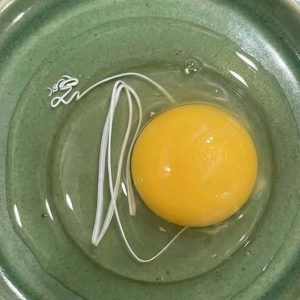
    Dr. Norwitz, a researcher-educator whose mission is to “Make Metabolic Health Mainstream,” recently gained significant attention online after documenting a bold dietary experiment on his YouTube channel. His plan? To consume 700 eggs in a single month and track what happened to his cholesterol levels.

    Yes — 700 eggs.

    Broken down, that equals roughly two cartons per day for 30 consecutive days. Or, as he described it, about one egg every hour. To reach that total, he ultimately consumed 24 eggs daily — a level of intake that would likely make even devoted breakfast lovers pause.

    The motivation behind this extreme food experiment wasn’t shock value alone. Dr. Norwitz wanted to test a specific hypothesis: that consuming a very high amount of dietary cholesterol from eggs would not significantly increase his LDL (low-density lipoprotein) cholesterol, commonly labeled the “bad” cholesterol.

    For decades, cholesterol has been viewed with caution. Many people grew up hearing that cholesterol-rich foods — especially eggs — posed a direct threat to heart health. Elevated LDL cholesterol has long been associated with increased cardiovascular risk, and conventional wisdom warned that high dietary cholesterol intake would inevitably raise blood cholesterol levels.

    However, nutritional science evolves. In recent years, some researchers have questioned whether dietary cholesterol has as direct an impact on blood cholesterol as once believed. That doesn’t mean 24 eggs a day is advisable — and even Dr. Norwitz’s experiment shouldn’t be interpreted as a universal recommendation — but it does add to an ongoing discussion about how the body regulates cholesterol.

    According to updates shared on his YouTube channel, Dr. Norwitz reported that his cholesterol levels did not spike as many might have predicted after consuming 720 eggs in one month. In fact, he claimed the opposite occurred.

    During the first two weeks of the experiment, his LDL cholesterol dropped by approximately two percent. Over the following two weeks, he reported an even more pronounced decline — about 18 percent in total.

    To explain these findings, Dr. Norwitz discussed how the liver plays a key role in regulating cholesterol production. The body doesn’t simply absorb dietary cholesterol in a linear way; instead, internal synthesis adjusts in response to intake. He also noted that later in the experiment, he increased his carbohydrate consumption.

    As reported by the New York Post, Dr. Norwitz explained:

    “The extra dose of carbs dominated over the insane amounts of cholesterol I was consuming.”

    In the final phase of his experiment, he incorporated fruits such as blueberries, bananas, and strawberries into his daily meals. Following this adjustment, he observed the most significant reduction in LDL cholesterol levels.

    While the results are intriguing, they also highlight how complex human metabolism can be. Individual responses to dietary cholesterol vary, and factors such as genetics, overall diet composition, physical activity, and metabolic health all play important roles. One person’s outcome under controlled conditions does not automatically translate to universal dietary advice.

    The broader takeaway from Dr. Norwitz’s egg experiment may not be that cholesterol concerns are unfounded, nor that extreme eating patterns are harmless. Rather, it underscores that nutrition science continues to develop — and that the relationship between dietary intake and blood biomarkers is more nuanced than once assumed.

    Whether viewed as a bold metabolic health experiment or simply an unconventional food challenge, the 700-egg month certainly sparked conversation.

    Have you ever taken on an unusual food challenge or experimented with a drastic diet change?

  • You don’t always have to flush the toilet: the habit we think is right, but isn’t

    You don’t always have to flush the toilet: the habit we think is right, but isn’t

    Flushing the toilet after urinating is something most people do without thinking—it’s seen as a sign of cleanliness and good manners. But what if this habit is actually doing more harm than good? 😲

    In a world where clean water is becoming scarcer, rethinking daily habits is essential—and flushing every time you pee is one of them. 💧

    Each flush uses several liters of drinkable water, adding up to significant waste over time. Not only does this strain the environment, but it also increases your water bill. 💵

    Experts suggest alternatives like “if it’s yellow, let it mellow,” especially in private homes or during droughts. Other options include using dual-flush toilets or composting systems that drastically reduce water usage. 🌱

    By making small changes, we can conserve resources, save money, and make a positive impact on the planet—one flush at a time.

  • SAD NEWS 10 minutes ago in Arizona, Annie Guthrie Guthrie was confirmed

    SAD NEWS 10 minutes ago in Arizona, Annie Guthrie Guthrie was confirmed

    Authorities in Arizona confirmed a somber update involving Annie Guthrie, deepening concern around an ongoing family ordeal. Officials verified the new information after reviewing recent findings and informed relatives before releasing it publicly. While details remain limited, the confirmation marks a serious shift in a case already filled with emotional strain.

    Law enforcement stressed that the update “does not represent the end of the investigation,” but instead changes how detectives are approaching the case. Investigators continue analyzing evidence, reviewing timelines, and following new leads. Officials urged patience, warning that speculation could interfere with their work.

    For Savannah Guthrie and her family, the news has been described as “deeply painful.” Those close to them said relatives were notified privately and are leaning on one another as they process the development. Family representatives asked for privacy and compassion during this difficult period.

    Authorities said their priority remains transparency balanced with sensitivity. More updates will be shared when appropriate, but for now, the focus is on accuracy, care, and continued investigation.

    The latest confirmation has cast a heavy shadow over the case, serving as a reminder that behind every breaking update are real people facing heartbreaking uncertainty.

  • Studies suggest people with a certain blood type may have a greater chance of reaching 100, as researchers explore links between genetics, longevity, heart health, inflammation, lifestyle factors, and disease resistance, sparking curiosity about how blood type might quietly influence aging, survival, and the odds of becoming a centenarian worldwide.

    Studies suggest people with a certain blood type may have a greater chance of reaching 100, as researchers explore links between genetics, longevity, heart health, inflammation, lifestyle factors, and disease resistance, sparking curiosity about how blood type might quietly influence aging, survival, and the odds of becoming a centenarian worldwide.

    Living to 100 was once considered nearly mythical, but modern medicine and public health have made exceptional longevity more attainable, though still rare. Advances in sanitation, vaccines, and healthcare have extended average lifespans, prompting scientists to explore why some people reach extreme old age. Among many factors studied, researchers have become interested in whether fixed biological traits, such as blood type, and early-life health markers can help explain who is more likely to live well into their nineties or beyond.

    Large-scale research in Sweden provided valuable insight by tracking tens of thousands of people over decades using national health records. Instead of relying on self-reported data, researchers analyzed objective blood tests taken in midlife and compared individuals who later lived past 90 with those who did not. The goal was not to predict individual outcomes, but to identify long-term biological patterns associated with longevity.

    The study found that long-lived individuals often showed slightly better metabolic health earlier in life, particularly more stable blood glucose levels. Chronic high glucose accelerates aging through inflammation and vascular damage, so better regulation over decades may reduce the risk of heart disease, stroke, and cognitive decline. These differences were subtle but consistent long before old age.

    Cholesterol balance also appeared important. Rather than extremely low or high levels, centenarians tended to fall within moderate ranges, suggesting that physiological balance matters more than extremes. Similarly, lower baseline inflammation was associated with longer life, supporting the idea that reduced chronic immune activation helps preserve organ function over time.

    Kidney function emerged as another key factor. Individuals who lived longest generally had better kidney-related markers earlier in life, which may improve the body’s ability to manage toxins, medications, and blood pressure across decades. Longevity appeared to result from many small advantages working together rather than one defining trait.

    Blood type, while genetically fixed, played only a minor role. Some types may slightly influence clotting or disease risk, but they do not determine lifespan. Overall, the research emphasizes that longevity reflects lifelong patterns of balance, resilience, and early health, shaped by genetics, habits, environment, and time.

  • SOTD – These are the consequences of sleeping co! See more

    SOTD – These are the consequences of sleeping co! See more

    In modern “personal health management” and “preventative medicine,” finding a bump or spot in the genital area can cause “psychological stress.” Yet “dermatological changes” in this region are common and often linked to harmless “lifestyle factors.” Understanding these changes and prioritizing “early intervention” supports “long-term sexual health and wellness.”

    One frequent cause is “folliculitis,” which results from irritated hair follicles, often due to shaving or waxing. These small bumps are usually “self-limiting” and improve with basic hygiene and warm compresses. Another common issue is “sebaceous cysts,” smooth, noncancerous lumps that form when skin glands become blocked. While usually painless, they may need attention if infected.

    Some conditions require closer monitoring. The “Human Papillomavirus” (HPV) can cause genital warts, and certain strains carry “oncological risks.” Regular screenings and vaccination remain key tools for prevention. The “Herpes Simplex Virus” (HSV) may cause painful blisters or sores, but “pharmaceutical interventions” and lifestyle management help reduce outbreaks and support quality of life.

    Other infections include “Molluscum Contagiosum,” which spreads through skin contact and often resolves naturally, and “Syphilis,” which begins with a painless sore called a “chancre.” Without treatment, syphilis can lead to serious complications, making “early diagnostic testing” and antibiotics essential.

    Chronic inflammatory conditions such as “Lichen Sclerosus” or “Lichen Planus” cause itching, discoloration, and discomfort. These require ongoing care, often with “topical corticosteroids,” to prevent scarring and preserve tissue health.

    Seeking “professional medical advice” should not be delayed by embarrassment. Symptoms like “rapid growth,” “unexplained bleeding,” or “persistent pain” need evaluation. While online tools can help, only a “certified healthcare professional” can provide an “accurate diagnosis,” which is the foundation of effective treatment and lasting peace of mind.

  • My Husband Confessed to Cheating After 38 Years of Marriage – Five Years Later, at His Funeral, a Stranger Said, ‘You Need to Know What Your Husband Did for You’

    My Husband Confessed to Cheating After 38 Years of Marriage – Five Years Later, at His Funeral, a Stranger Said, ‘You Need to Know What Your Husband Did for You’

    I saw her during the second hymn.

    She wasn’t crying. She wasn’t praying. She was just… watching. Alone in the back pew, hands folded in her lap like she’d practiced being still. And she wasn’t wearing black—just a simple gray dress, the kind you’d wear when you didn’t want to be noticed but had to show up anyway.

    I knew everyone else in that church. After all, Richard and I had spent nearly four decades stitching our lives into the same town, the same routines, the same people. Our children were in the front row beside me. Gina’s fingers clamped around mine like she was afraid I might vanish. Alex stared forward with that familiar rigid jaw—his father’s jaw—like it could hold grief in place by force.

    But the woman in the back?

    I didn’t know her.

    Which meant she mattered.

    When the final prayer ended and people rose in a soft wave of movement—hugs, murmured condolences, that awkward shuffling sound of grief trying to behave—I found myself walking toward the back before I even decided to. It was instinct. A heat in my chest that wasn’t sadness so much as suspicion.

    Gina noticed right away.

    “Mom—where are you going?”

    “Bathroom,” I lied, and kept my voice steady the way I’d learned to keep it steady after five years of swallowing questions.

    “I’ll come with you.”

    We reached the last pew, and the woman stood.

    “Julia?” she said, too loud.

    Heads turned. Someone actually paused mid-embrace.

    Gina’s hand fell away from mine. “How does she know your name?”

    The woman flinched, like she hadn’t meant to crack the room open.

    “Please,” she said quickly, lowering her voice. “I’m sorry. It’s… hospice.”

    And that single word sliced the air in half.

    Hospice didn’t belong in the story I’d been living for five years. Hospice was not the ending I’d imagined for the man who once built our kids a treehouse and fixed the kitchen faucet with a stubbornness that made me laugh. Hospice wasn’t supposed to be connected to Richard without my knowing.

    Gina leaned into my shoulder. “Mom… are you okay?”

    “I’m fine,” I said, because I didn’t feel fragile. I didn’t feel like crying. I felt hollow, like betrayal had already drained me years ago and there was nothing left to spill.

    That’s the thing about a long marriage ending in a short confession: it changes what grief looks like. It doesn’t come as a wave. It settles like dust and hardens into something that doesn’t show on your face.

    Richard and I met when we were twenty. I wore a green sweater that day. He told me it matched my eyes, and I rolled my eyes so hard I nearly missed the bus. He was clever, patient, infuriatingly kind. We married at twenty-two. We raised two children. We built a home full of ordinary miracles—burnt casseroles, holidays that never looked like the catalog, Sunday pancakes, and a spice rack I kept alphabetized even though he never put anything back in the right place.

    For thirty-eight years, I believed we were happy.

    Then he became distant. Quiet in a way that felt like a shadow followed him. He started sleeping on the couch in his office with the door locked, blaming work stress. Some nights I heard him coughing and sat on the other side of that door, my hand pressed to the wood like I could steady him from a distance.

    “Richard?” I’d whisper.

    He never opened it.

    I thought it was depression. I begged him to talk.

    Then, one night after dinner, he sat at the kitchen table—the same table where we’d celebrated birthdays, graduations, Gina’s terrible baking experiments—and said it in a voice that didn’t shake:

    “Julia, I cheated on you.”

    I remember staring at him like my body hadn’t received permission to understand.

    “What?”

    “I cheated,” he repeated. “I’ve been seeing someone else. I’m sorry.”

    He didn’t cry. He didn’t even look at me.

    “What’s her name?” I demanded, because I needed something concrete to hate.

    “I don’t want to talk about it.”

    “No,” I snapped. “You don’t get to shatter thirty-eight years with one sentence and then sit there like you lost your keys.”

    His hands trembled. He still said nothing.

    A week later, I asked for a divorce.

    He didn’t fight. He didn’t beg. It was clean, bloodless, and somehow crueler for how easy he made it. The kids stayed in touch with him. I told them I was fine with that. Told them I didn’t need to be part of it anymore.

    That was a lie I repeated until it sounded like truth.

    Five years passed. Quiet years. I rebuilt in small, careful ways—lunch dates, holidays with the kids, moving furniture so the house felt less like him. I stopped asking questions because I didn’t expect answers.

    Then Gina called.

    “Mom,” she said, voice tight, “it was a heart attack. They said it happened fast.”

    I didn’t cry. I just sat on the edge of my bed listening to her breathe on the other end of the line.

    “There’s a service,” she added. “At the old church. Saturday. Alex and I are going.”

    I heard myself say yes before I even knew why. Maybe I needed to prove I’d moved on. Maybe some part of me hadn’t.

    Now, standing in that church, staring at the gray-dressed stranger, I felt something shift.

    I turned to Gina, squeezed her hand once, and then faced the woman.

    “I don’t believe we’ve met,” I said.

    “No,” she replied softly. “We haven’t.”

    “You knew Richard.”

    Her eyes held mine without flinching. “Yes. I’m Charlotte.”

    “From where?”

    She exhaled like she’d been carrying that breath all morning. “I was with him at the end, Julia. Hospice.”

    My stomach turned cold. “Hospice? What are you talking about?”

    Her expression wasn’t pity. It was something steadier—like she’d watched enough grief to understand what it does to a person’s face.

    “Richard had pancreatic cancer,” she said quietly. “Stage four. He refused treatment. He didn’t want anyone to see him like that.”

    My throat tightened in a way that felt almost violent. “He told me he was cheating on me.”

    “I know,” she said.

    The word hit me like a slap.

    “You knew?” I stepped back before I could stop myself.

    She nodded once, and her fingers tightened around the strap of her purse.

    “He asked us not to tell you,” she said. “He said you would stay. And he couldn’t bear what staying would do to you.”

    “And that was… a bad thing?” My voice cracked, and I hated that it did.

    Charlotte hesitated, then reached into her bag and pulled out an envelope. The paper looked worn, like it had been handled too many times.

    “He didn’t just ask,” she said. “He put it in writing.”

    At the top was hospital letterhead. Beneath it, in clean typed ink:

    DO NOT CONTACT JULIA ____ UNDER ANY CIRCUMSTANCES.

    My name looked strange on the page, as if it belonged to someone else. The date beside it was five years ago. His signature sat at the bottom like a final, deliberate decision.

    “He wanted you to hate him,” Charlotte whispered. “He thought it would be easier than watching him die.”

    I didn’t open the letter there. I couldn’t. The church air felt too thick, too public. I tucked the envelope into my bag and left without saying goodbye to anyone—not even Gina and Alex.

    At home, the house felt like it was holding its breath. I changed out of my dress. I made tea just to keep my hands busy. I sat on the back porch where Richard used to complain about the mosquitoes and I used to tell him he was dramatic.

    The night was still. Cool enough to make the world feel quiet and sharp.

    I held the envelope for a long time, thumb tracing the edge like it might cut me.

    Then I opened it.

    His handwriting hadn’t changed. The letters slanted the same way they always had, like even his apologies were trying to move forward.

    “Julia,

    I didn’t touch anyone else, my love. I promise. There was no affair.

    I got the diagnosis, and I knew what it would do to you.

    You would’ve stayed. You would’ve fed me soup and cleaned up after me and watched me fade, and it would’ve taken you with me.

    You gave me your whole life. I couldn’t ask you to give me more.

    I needed you to live, my love. I needed you to hate me more than you loved me—just long enough to walk away.

    I’m sorry. I’m so sorry. But if you’re reading this, it means I got my wish.

    That you’re still here.

    That you lived.

    I loved you until the end.

    —Richard”

    I stared at the page until the words blurred. My hand covered my mouth, not because I was sobbing, but because I didn’t know what to do with a love that came wrapped in cruelty.

    He hadn’t cheated.

    He had chosen to become the villain so I could be the survivor.

    And suddenly, the past five years rearranged themselves in my head like furniture in a room I thought I knew.

    The next morning, I called Gina and Alex and told them to come over. I didn’t explain. I just said, “I have something you need to read.”

    They arrived with coffee and worried faces.

    Alex stood by the back door, hands in his pockets. Gina kissed my cheek and scanned the kitchen like she expected it to look different.

    “Mom… everything okay?” Alex asked.

    I placed the envelope on the table between us. “Read it.”

    They leaned in together, eyes moving across the page.

    Gina’s hand flew to her mouth. Her eyes filled instantly.

    Alex’s jaw tightened so hard I could see the muscle twitch.

    “He let us believe he was a monster,” Alex said finally, voice rough.

    “He was dying,” I said. My voice sounded too calm for what was happening inside me. “And he made sure I never saw it.”

    Gina wiped her cheeks. “He thought he was saving you.”

    “Maybe,” I answered. “But he stole my choice. And he let me carry the shame.”

    Silence settled over us—not holy, not comforting—just heavy with the cost of what he’d done.

    After a long moment, I exhaled, shaky and slow.

    “And the worst part?” I added quietly. “I don’t know whether to forgive him… or miss him more.”

    We didn’t talk much after that. I made food. They stayed. The silence felt different now—full instead of empty, like grief had finally taken off its mask.

    A week later, Alex came by again, alone. He held another envelope.

    “What now?” I asked, attempting a half-smile.

    He handed it to me. “Dad updated his will. Charlotte helped him finalize things.”

    I braced myself for legal language, for another twist.

    Instead, a deed slid out onto the table.

    The lake cabin.

    The one we took the kids to every summer. The one with the leaky roof and the old pine tree with the swing that squeaked in the wind. The one I hadn’t stepped foot in since the divorce because I couldn’t bear the ghost of the life we used to have.

    “It’s in your name,” Alex said. “All of it.”

    A sticky note clung to the corner, faded yellow, with handwriting I knew like my own.

    “Keep the porch light on, my love.

    Do it in case the kids come back.

    And in case you want to watch the water again.

    I’ll be there. Just not where you can see.”

    I read it once.

    Then again.

    Outside, wind dragged a leaf across the window until it stuck there, stubborn and small, like it refused to let go.

    I traced the edge of the note with my fingertip.

    “He left,” I whispered. “So I’d keep the light on.”

    Alex’s voice cracked. “You did, Mom. You kept it on.”

    And for the first time in five years, I let myself believe it.

    Not because Richard deserved absolution.

    But because I deserved peace.

    If you could give one piece of advice to someone caught between anger and love like this, what would you tell them?

  • Blood, Broken Security Cameras: The Strange Case of Nancy Guthrie

    Blood, Broken Security Cameras: The Strange Case of Nancy Guthrie

    Waiting in the Silence: When a Home Becomes a Place of Unanswered Questions
    Some nights pass quietly, leaving nothing behind but ordinary memories. Others change everything.

    For one family in a calm Tucson foothills neighborhood, a routine evening ended in uncertainty and fear. What remained were troubling signs and an absence that could not be explained. An elderly woman who had always been present, always reliable, was suddenly gone.

    Eighty-four-year-old Nancy Guthrie had vanished without warning.

    When relatives arrived at her home, they sensed immediately that something was wrong. There was no message. No explanation. No indication that she had chosen to leave. Only fragments that suggested disruption and distress—details that offered questions instead of answers.

    A Disappearance Without Clarity
    Authorities have stated that the circumstances point toward the possibility of an abduction. Yet no suspects have been identified, and no clear motive has emerged. Even the physical evidence found at the scene has not yet provided certainty.

    For investigators, the case remains open and complex.

    For the family, it is unbearable.

    Each day without information deepens the sense of helplessness. Each unanswered call, each quiet hour, becomes heavier than the last. Life continues around them, but they remain suspended in a moment that refuses to resolve.

    From Reporting Tragedy to Living It
    For Nancy’s daughter, Savannah Guthrie, the experience carries a painful irony.

    Known publicly for reporting on major events and human suffering, she now finds herself inside a story she never wanted to tell. Instead of asking questions, she waits for them to be answered. Instead of observing loss from a distance, she is living through uncertainty herself.

    It is a reminder that tragedy does not distinguish between public and private lives. It arrives without warning and reshapes everything.

    A Community in Quiet Alarm
    Neighbors have watched the situation unfold with growing concern. In a place known for its safety and familiarity, fear has quietly settled in.

    People check their doors more often.
    They notice unfamiliar sounds.
    They look out for one another more closely.

    Not out of panic—but out of awareness.

    When something like this happens nearby, it unsettles assumptions. It challenges the belief that danger always announces itself in advance.

    Sometimes, it does not.

    The Hidden Fragility of Everyday Life
    Cases like Nancy Guthrie’s remind us how quickly normal life can fracture.

    One evening, everything is ordinary.
    The next, nothing is.

    Homes that once symbolized comfort become places of uncertainty. Routines that once felt secure become memories. Families are forced to live inside questions that have no immediate answers.

    This vulnerability is part of being human. It is easy to forget—until it touches someone close.

    Between Hope and Fear
    For families of the missing, life becomes a balance between two opposing forces.

    Hope insists on believing in reunion.
    Fear whispers darker possibilities.

    Neither can be silenced.

    Every development feels significant.
    Every delay feels cruel.
    Every day matters.

    Yet they continue to wait.

    Because waiting is all they can do.

    Why These Stories Matter
    It is important that such cases are handled with care—not as entertainment, not as speculation, but as real human crises.

    Behind every headline is a family living in pain.
    Behind every update is someone praying for answers.
    Behind every unanswered question is love that refuses to give up.

    Public attention, when guided by respect, can help keep hope alive. When driven by rumor, it only deepens wounds.

    Holding Space for Resolution
    As investigators continue their work, the community and family remain united by one shared desire: clarity.

    Not for headlines.
    Not for closure alone.
    But for truth.

    For Nancy.
    For her loved ones.
    For peace of mind.

    Her disappearance stands as a reminder that safety is fragile, that presence is precious, and that every ordinary day is a gift we often recognize only when it is threatened.

    Until answers come, her family waits.

    And hopes.

    And holds on.